Exploring “Home” Through South Asian Multimedia Art
• ~10–12 min read
For many South Asian American women, “home” is not a single place. It is a lived negotiation among memory, migration, and expectation. Multimedia art becomes a way to narrate that complexity, to resist silence, and to imagine new forms of belonging.
Why “home” is contested
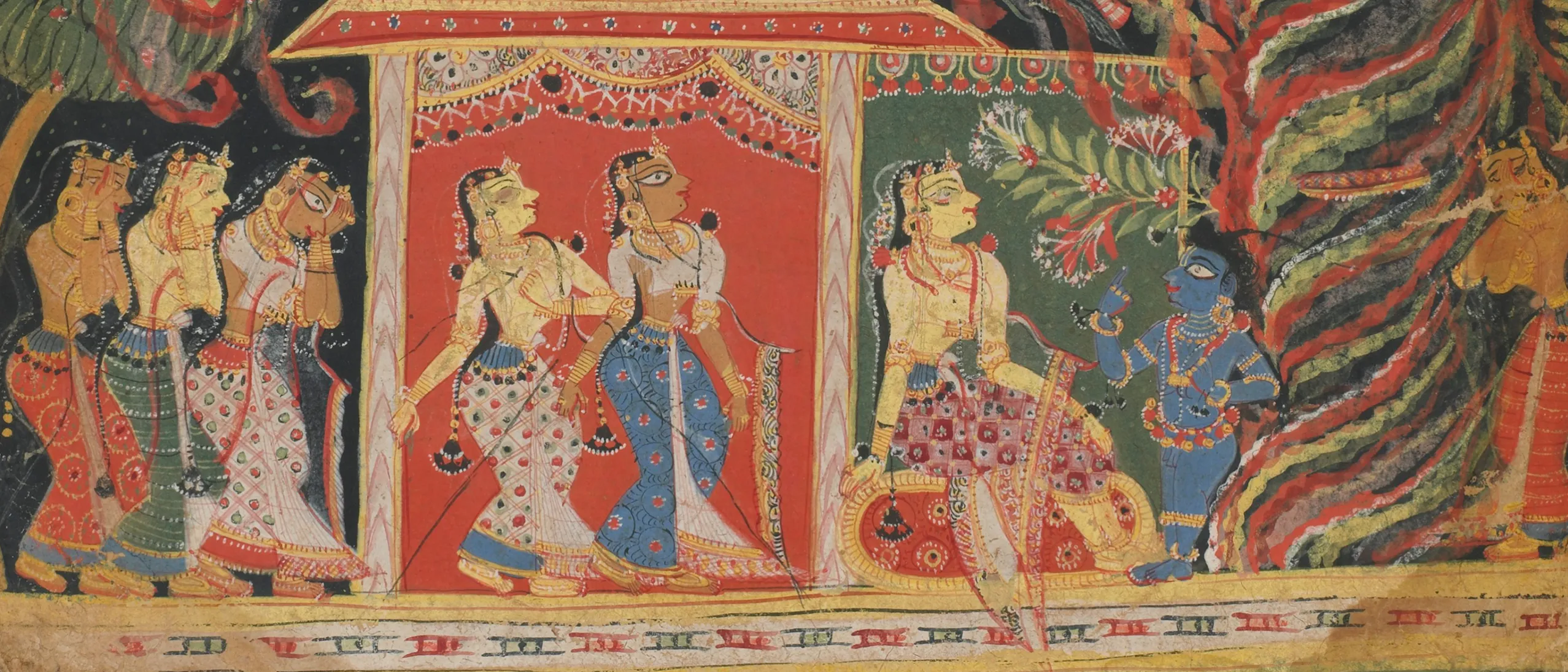
“Home” carries different meanings that depend on culture, identity, and lived experience. For South Asian American women in particular, it is shaped by intergenerational expectations and the pull of multiple cultural contexts. These negotiations are personal and also political, involving conflicting values, marginalization, and the search for self-definition. South Asian visual culture has long used story and symbol to express identity, and that tradition continues in the diaspora [1].
Multimedia art creates room for voices that mainstream narratives often sideline. Through symbolic imagery, personal narrative, and memory, artists challenge patriarchal and colonial legacies. In doing so, they expand who is seen and remembered and they reframe what “home” can mean: a space for cultural survival, emotional truth, and radical imagination.
History and memory: Partition as a throughline
The region’s histories of empire, religion, and migration shape how diasporic communities see themselves. A key turning point is the 1947 Partition of British India into India and Pakistan, which generated mass displacement and fragmented identities. Contemporary artists continue to process its legacies through visual language that conveys rupture, grief, and transformation [2].
In Leaping Bridges, Arpita Singh layers myth and memory to evoke disorientation and loss. References to the Ramayana echo forced separations, while the contrast between “my land” and “your land” stages how borders reconfigure belonging. The work shows how cultural memory becomes a form of resistance and healing.
Why multimedia matters
For many women navigating tradition and modernity, multimedia forms enable nuanced self-representation. Combining text, image, and digital tools allows artists to challenge fixed roles around gender, family, and nation [3], [4].
“Comics and zines can look light, yet carry profound political weight.” — Drawing the Line: Indian Women Fight Back [5]
Anthologies and zine projects show how visual narrative can speak openly about shame, domestic labor, or emotional repression, turning private pain into shared language [6].
Case studies: Arpita Singh and Chitra Ganesh
Arpita Singh’s work draws on epic and everyday scenes to map grief and endurance across generations. The non-linear composition mirrors fragmented identities produced by migration and border violence.
Chitra Ganesh reimagines women from Hindu iconography and South Asian comics to explore agency and queerness. In Ancestral Visit (2023) and the mural Eyes of Time, hybrid figures blend myth and science fiction to reframe femininity and power, placing South Asian women at the center of speculative futures [7], [8].
Collective platforms: Kadak and SAWCC
Collective practices are crucial. Kadak Collective and the South Asian Women’s Creative Collective build cross-border networks that amplify first-person narratives and feminist critique. Projects like Bystander Anthology gather dozens of artists across countries to address domestic labor, mental health, caste privilege, and everyday violence through comics and essays [6], [9], [10].
These spaces turn witnessing into a shared political practice and help define home as community and solidarity, not only geography.
Hybridity and the “third space”
Many artists blend illustration with oral history or collage archival photos with personal memory. Cultural theorist Homi Bhabha calls this a “third space” where new meaning emerges through contact between cultures [11]. Gayatri Gopinath’s work on queer diaspora shows how hybrid forms unsettle heteronormative and nationalist frames and make room for alternate ways of belonging [3].
Santhi Kavuri-Bauer and Emily Watlington trace how the South Asian body becomes a political subject rather than an exotic object and how visual strategies can disrupt gendered and racial assumptions [10], [12].
Access and digital platforms
Digital comics, zines, and online exhibitions lower barriers and reach community audiences without traditional gatekeeping [6], [13]. While debates around NFTs and AI raise concerns, digital tools can also widen who gets to make and share art [14].
What “home” becomes
For South Asian American women, creative practice becomes a compass. It reconciles intergenerational legacies with present realities and turns emotional labor into public language. Multimedia art is not only self-expression. It is knowledge-making, healing, and activism. It builds a living archive where identity is flexible and evolving and where community becomes a place to be seen and heard.
References
- The Metropolitan Museum of Art. “South Asian Art and Culture.” metmuseum.org.
- “Partition’s Legacy: South Asian Art on the Line.” Mittal Institute, Harvard. mittalsouthasiainstitute.harvard.edu.
- Gopinath, Gayatri. Impossible Desires. Duke University Press, 2005.
- Kina, Laura. “Contemporary Asian American Art.” Oxford Research Encyclopedia of Literature, 2020.
- Kuriyan, Priya, ed. Drawing the Line: Indian Women Fight Back. Zubaan Books, 2015.
- Davies, Dominic. “An Interview with the KADAK Collective.” Journal of Graphic Novels & Comics, 2021.
- Chitra Ganesh. “The Unknowns.” chitraganesh.com.
- Sarita, Ananda. “Goddess Kali Maa.” anandasarita.com.
- South Asian Women’s Creative Collective. Her Stories. sawcc.org.
- Kavuri-Bauer, Santhi. “The Parallax View.” South Asian Diaspora, 2018.
- Bhabha, Homi. The Location of Culture. Routledge, 1994.
- Watlington, Emily. “Queering Contemporary Asian American Art.” Queer Studies in Media & Pop Culture, 2018.
- Baig, Noorie. How South Asian Activists Queer the Model Minority Myth. 2022.
- Eğridere, Seda & Tülin Ok. “The Role of Digitalization in Today’s Art.” 2024.